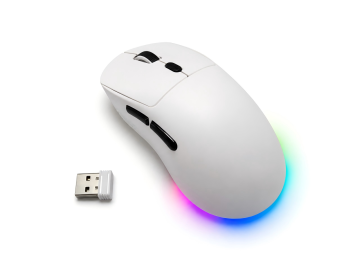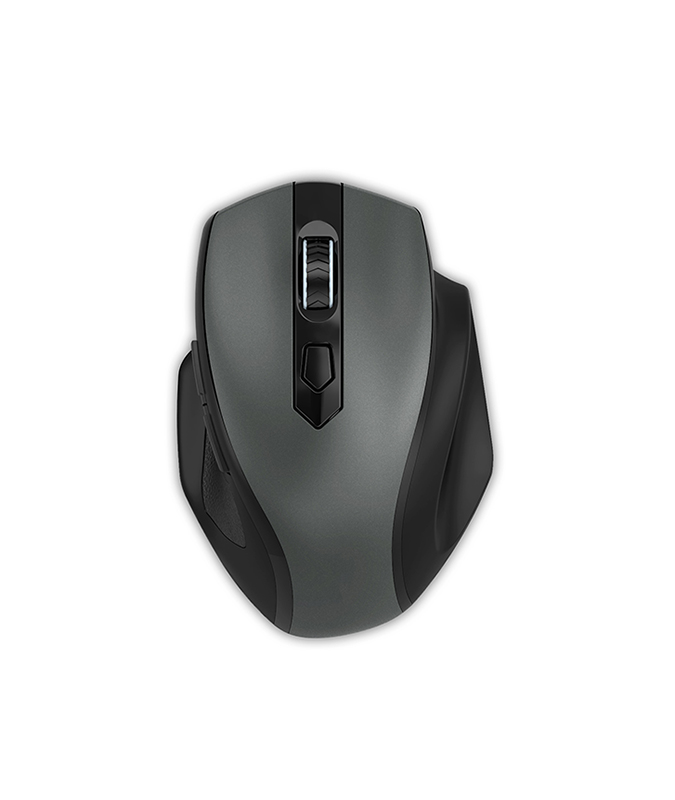
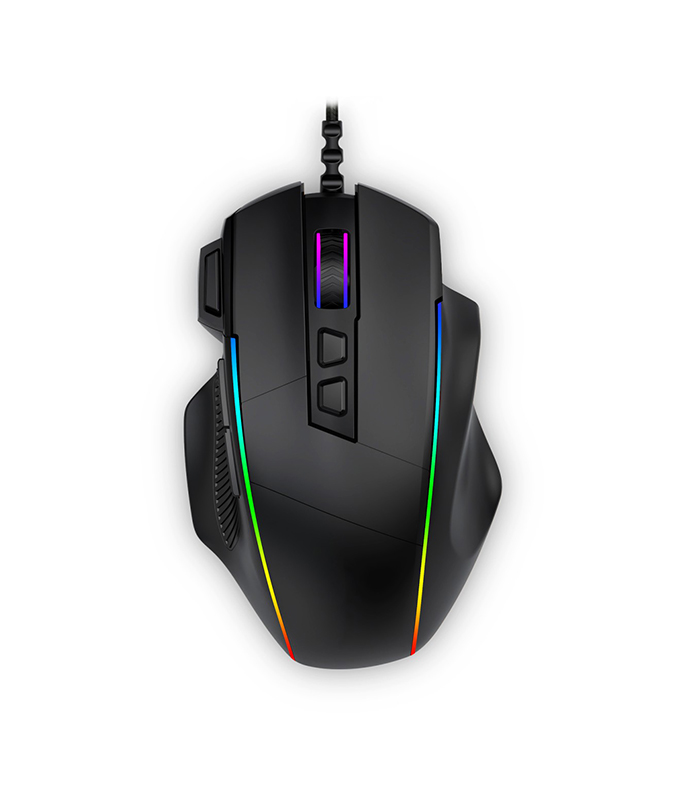
X-49 Ergonomic RGB Gaming Mouse
Aerodynamic shell engineered for competitive e-sports claw grips with dynamic zone-mapped RGB lighting presets.
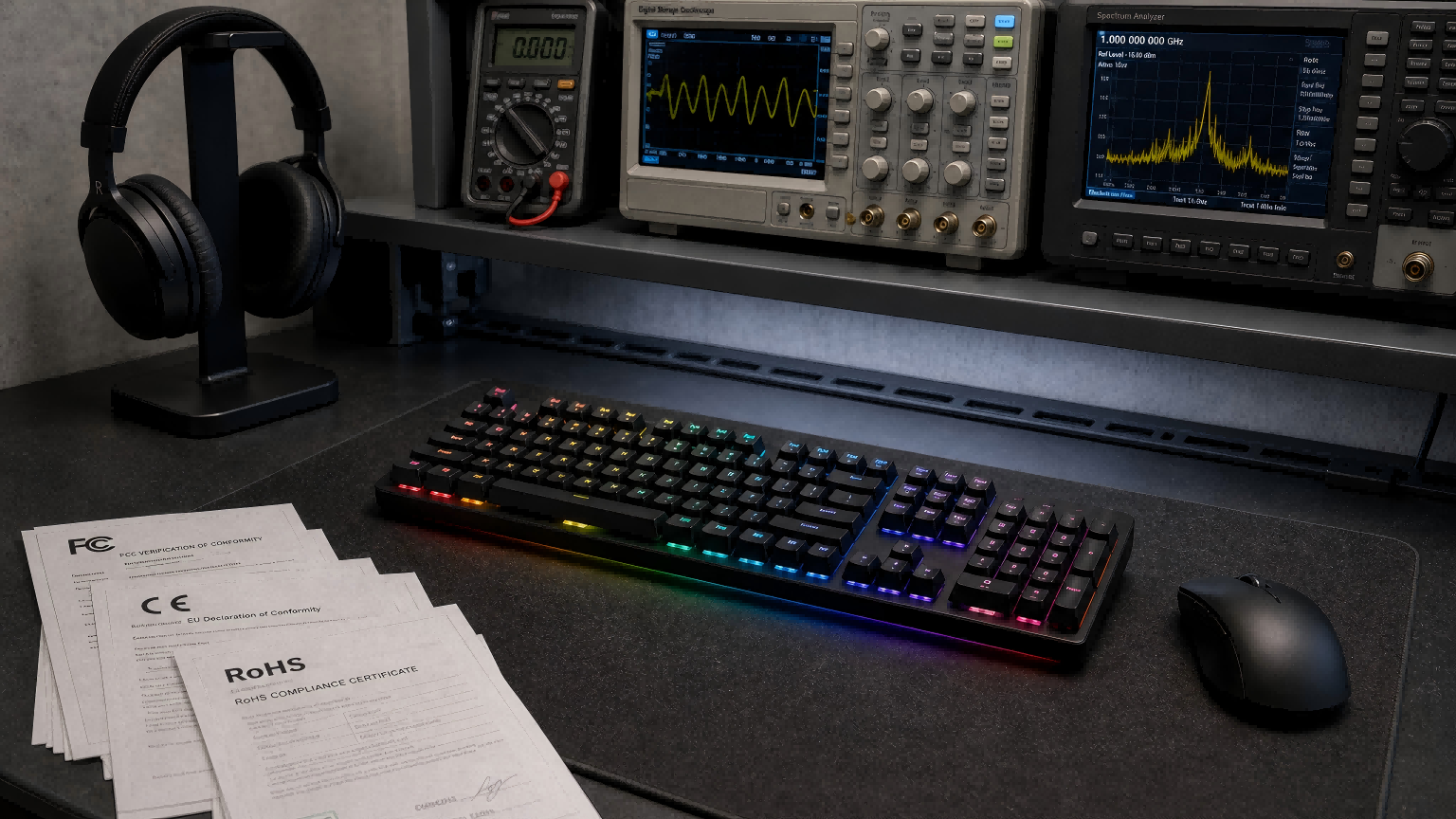
Standard platforms tooled and mass-produced in Longgang, Shenzhen, compliant with CE, FCC, and RoHS standards for instant regional deployment.
Aerodynamic shell engineered for competitive e-sports claw grips with dynamic zone-mapped RGB lighting presets.
24,000 DPI tracking with PAW3311 optical engine, 2.4G low-latency, BT 5.2, and Type-C fast-charging telemetry.
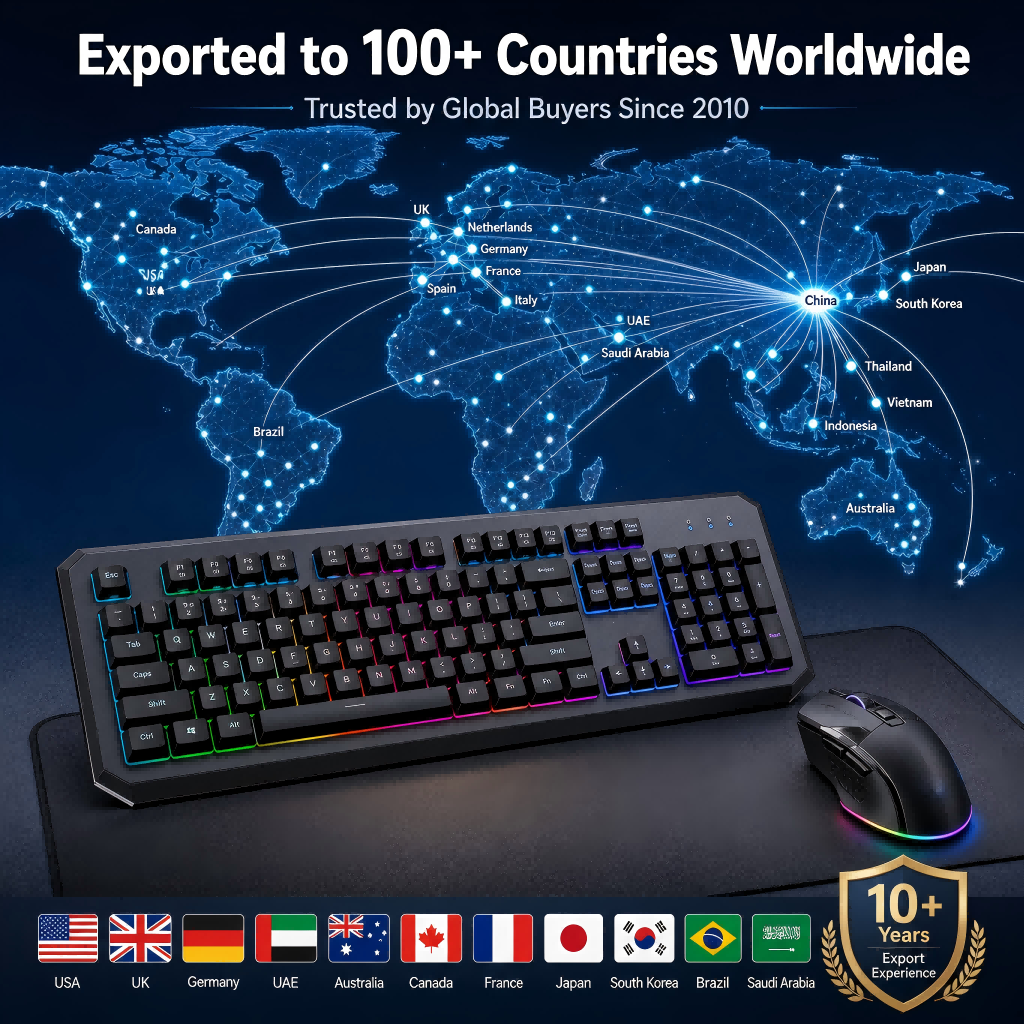
Unified single-box retail SKU integrating an anti-ghosting mechanical feel board with a precision RGB laser mouse.
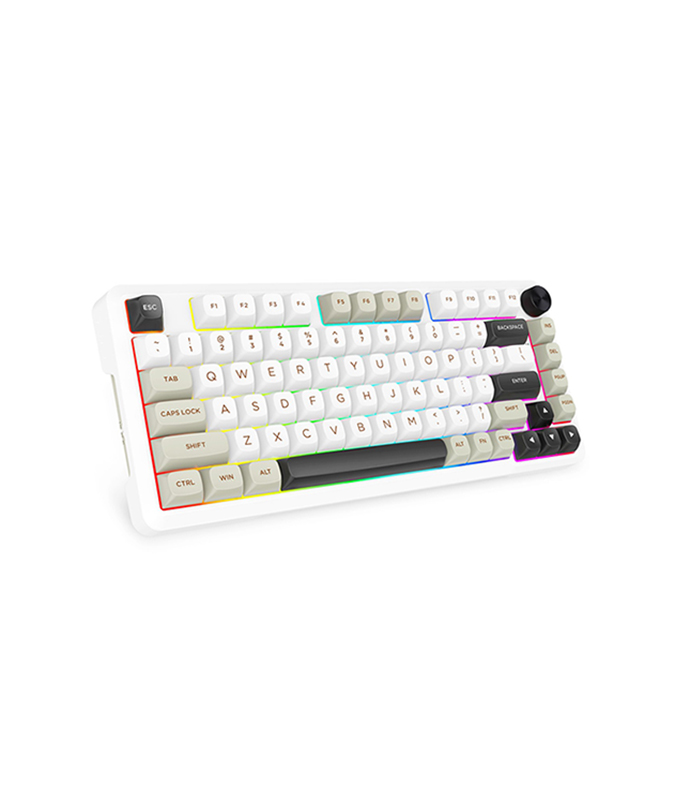
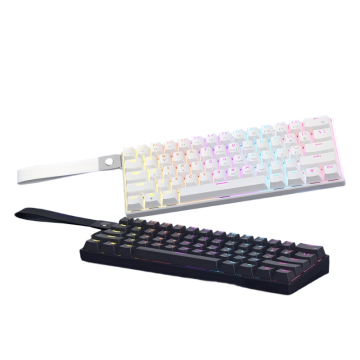
Hot-swappable key switches, individual per-key RGB backlighting, compatible with custom injection PBT keycaps.
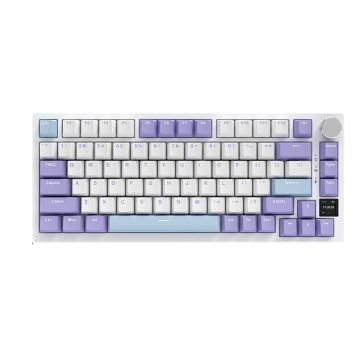
Enthusiast-level acoustic dampening, sound-absorbent silicone pads, built-in dynamic 0.85-inch smart TFT display.
Space-saving footprint designed to maximize mouse movement surface on competitive desks. Full onboard MCU profile recall.
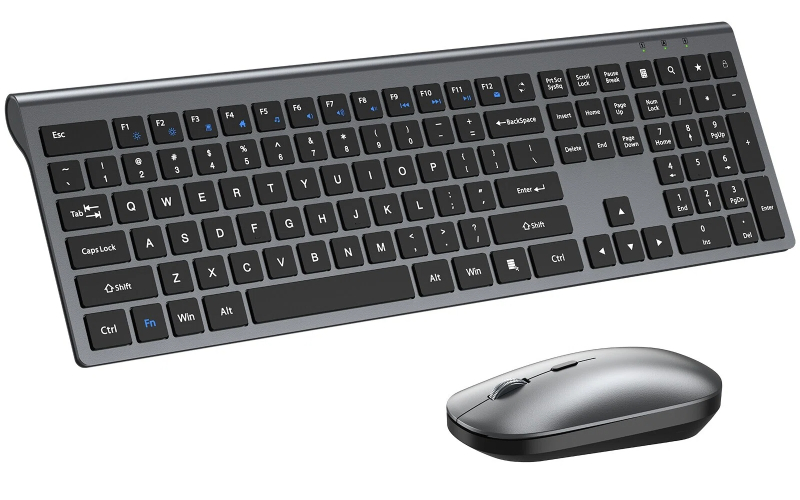
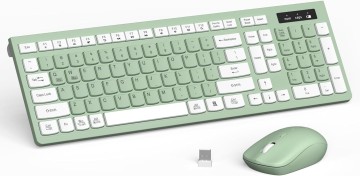
Low-power RF transceiver design pairing a silent scissor/membrane switch keyboard with a precision ambidextrous mouse.
Ergonomic contouring with silent micro-switches rated for open-office configurations and corporate deployments.
As competitive esports converge with consumer lifestyle computing, business procurement teams face new demands across battery chemistry, wireless polling rates, and aesthetic customization.
Traditional 125Hz–1000Hz polling rates are yielding to true 4,000Hz and 8,000Hz wireless polling ICs. Brands are specifying Nordic nRF52840 or Realtek gaming chipsets to eliminate packet transmission latency, maintaining sub-1ms response times even while dynamic RGB algorithms are pulsing concurrently.
Without sacrificing structural rigidity or battery reserve, modern ODM shell engineering utilizes internal skeleton ribbing and high-grade thin-wall injection molding (PC/ABS composite). This structural design achieves weights under 60-65 grams without requiring honeycomb surface perforations that let dust penetrate the internal PCB.
Illumination remains a defining aesthetic driver. Modern ODM buyers require intelligent proximity and gyroscopic sensors that automatically dim RGB lighting arrays during continuous motion, preserving power for processing position frames, and restoring luminous diffuse effects when the user rests.
Mechanical switch degradation and double-click degradation are primary drivers of warranty returns for gaming brands. Tier-one ODM platforms incorporate light-actuated optical micro-switches rated for 80M to 100M actuations, completely eradicating physical contact oxidation and electrical debounce delays.
Global consumer electronics distributors are reducing supplier fragmentation by sourcing unified peripheral platforms. Deying's integrated manufacturing covers synchronized mouse sensors, keyboards, and audio arrays calibrated to run on a consolidated driver interface and single-receiver setup.
Positioned in the Longgang technology corridor of Shenzhen, Deying executes end-to-end peripheral manufacturing. From raw plastic pellet drying and structural injection molding to robotic SMT placement of optical tracking boards, our localized industrial footprint reduces vendor hops to zero.
Global brands minimize inventory carrying risk through our scalable production capabilities. Whether supplying entry-level corporate distribution runs or high-performance esports mice requiring calibrated balance testing and custom firmware flashing, our facility maintains consistent manufacturing tolerances across every batch.
Peripherals engineered to match specific operational demands across competitive gaming, corporate fleets, and consumer retail channels.
Hardware Priority: Zero latency, PAW3395/3311 sensors, pure PTFE mouse feet, and interference-resistant 2.4GHz frequency hopping. Factory-calibrated lift-off distance (LOD 1.0mm-2.0mm) guarantees tracking precision across variable gaming surfaces.
Hardware Priority: Silent Kailh/Huano switches (<20dB noise footprint), ergonomic palm contours to prevent repetitive strain injuries (RSI), long-lasting lithium cells, and cross-platform compatibility across Windows, macOS, and Linux.
Hardware Priority: Striking visual presence with edge-to-edge diffuse RGB lighting, turnkey bilingual packaging, serialized barcodes, and full CE/FCC/RoHS regulatory compliance for smooth customs clearance.
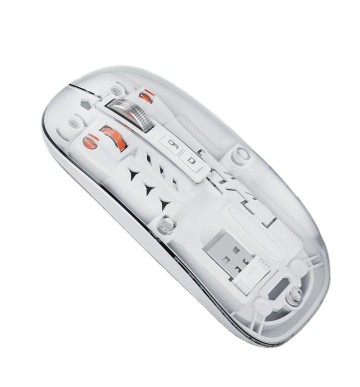
Hardware Priority: High-impact ABS shell structures, spill-resistant internal coatings, tamper-proof USB dongle storage compartments, and simplified bulk packaging configurations to optimize international freight volume.
Hardware Priority: Multi-mode connectivity supporting up to three paired devices with one-touch switching, tactile metal scroll wheels for linear timeline scrubbing, and customizable macros for shortcuts in creative suites.
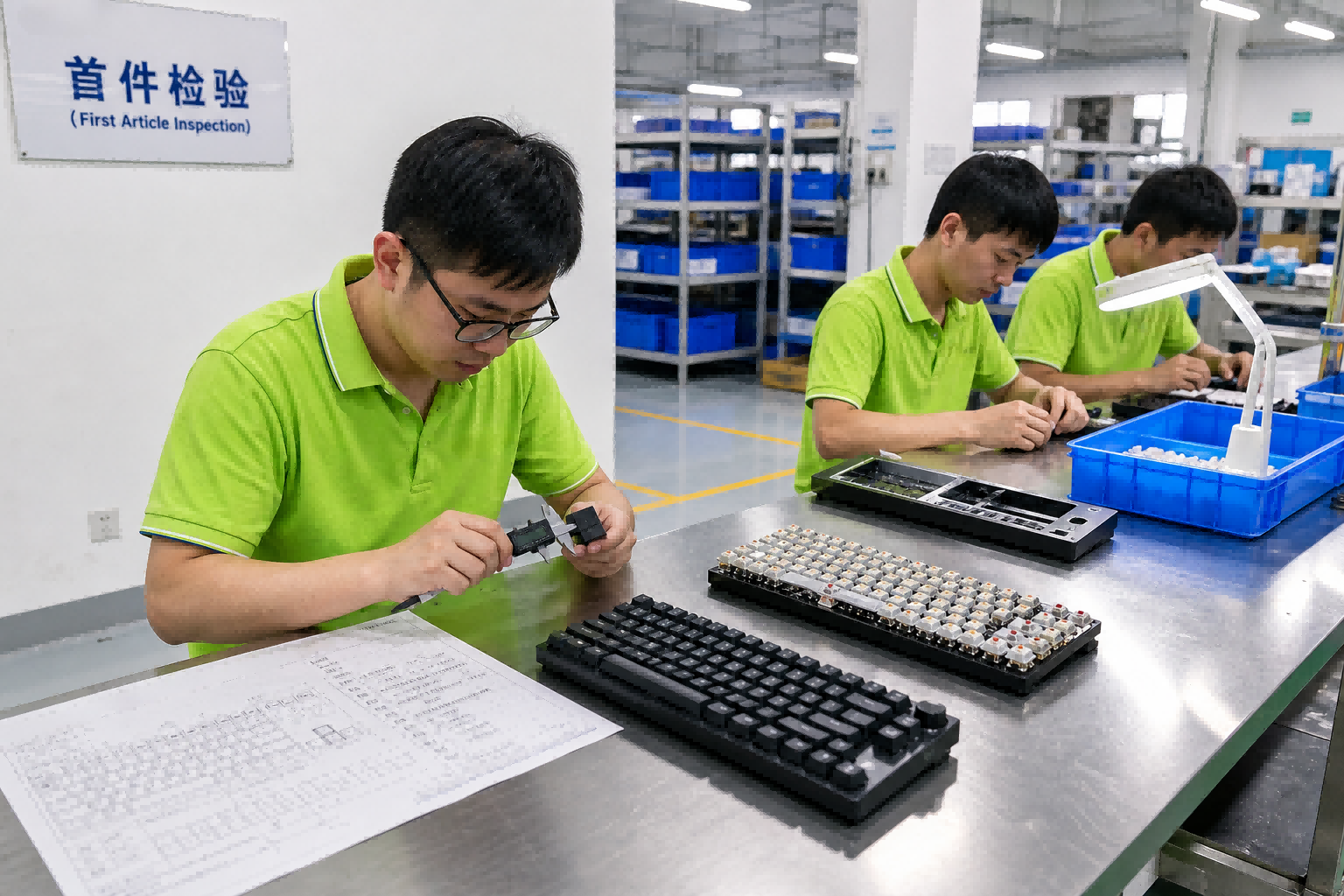
Mitigating mass-manufacturing risk through precise sampling gates and automated inspection protocols.
Target price point definition, industrial design evaluation, MCU selection, optical sensor matching, and battery endurance profiling.
Internal weight balancing, click-latency optimization, antenna RF trace layout, and RGB diffusing lens simulation.
In-house high-tonnage injection mold builds for outer shells, internal structural frames, scroll wheel mounts, and custom keycap sets.
Final pre-production physical samples evaluated for tactile click feedback, surface finishing (UV matte vs rubberized), and drop test survivability.
10 automated lines execute sensor alignment, high-speed soldering, functional RF throughput testing, and continuous optical switch tracking tests.
Automated blister packaging, localized instruction printing, custom barcodes, and FOB/CIF pallet preparation for direct container loading.
Actionable technical whitepapers to help procurement officers and product directors navigate overseas peripheral manufacturing.
A breakdown of upfront NRE tooling costs versus rapid go-to-market iterations using existing platforms, covering patent protection and exclusivity boundaries.
Read Manufacturing Guide
Essential testing parameters for intentional radiators (2.4GHz RF & Bluetooth BLE) and battery safety directives (UN38.3, MSDS) when importing into North America and the EU.
Review Compliance Matrix
How rigorous golden-sample preservation, automated optical inspection (AOI), and continuous batch micro-switch actuation testing maintain yield rates above 99.4%.
Examine QA ProtocolsClear answers to key technical, contractual, and logistics questions from brand directors and procurement professionals.
Under an ODM agreement, you leverage our existing production-proven, fully certified tooling platforms, customizing exterior housing colors, surface textures (rubberized vs. matte UV), logo illumination, switch brands (Huano, Omron, Kailh), and customized driver firmware. OEM engagements start from blank-slate industrial design (ID), custom shell molding, and proprietary PCB engineering tailored to your proprietary specifications.
Unoptimized continuous RGB backlighting can consume up to 60-70% of an internal lithium cell's current draw. Deying's proprietary firmware uses intelligent sleep algorithms and motion-sensing dimming that turns off high-draw LEDs during active movement, delivering 50-80 hours of continuous tracking performance on a standard 500mAh cell.
Our standard wireless platforms are certified for CE (RED), FCC ID, and RoHS compliance, facilitating importation across North America and Europe. For rechargeable wireless models, complete battery documentation suites—including UN38.3 test reports, MSDS declarations, and drop-test transport packaging certifications—are prepared to ensure smooth ocean and air freight logistics.
Our engineering teams implement dynamic frequency-hopping spread spectrum (FHSS) algorithms in the 2.4GHz ISM band. If localized interference from Wi-Fi 6 or adjacent wireless peripherals is identified, the mouse MCU automatically shifts to an open frequency channel within microseconds, preventing dropped tracking frames or signal latency spikes.
Standard ODM platforms featuring customized logos, customized keycaps, and localized packaging carry an initial production run MOQ starting at 1,000 to 2,000 units per colorway. Typical lead times are 25 to 35 business days following golden-sample sign-off. Bespoke OEM projects with custom tooling molds require approximately 45 to 60 days for mold manufacturing and DFM validation.
Yes. We welcome client visits to our 12,000 m² Longgang, Shenzhen manufacturing facility. International procurement teams regularly conduct on-site facility tours, review cleanroom injection lines, evaluate optical testing labs, and coordinate product launch roadmaps with our resident engineering teams.
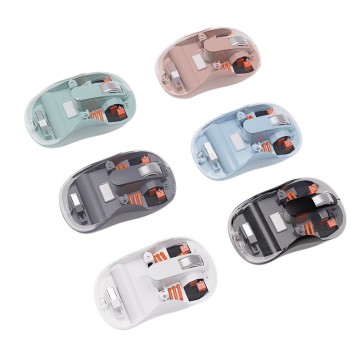
Explore our broader selection of ergonomic, ultra-light, transparent, and multi-device models ready for brand deployment.
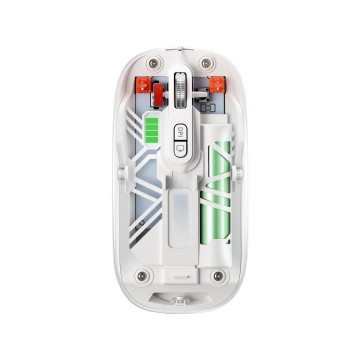
Removable magnetic top shell showing internal RGB lighting accents, paired with silent tactile micro-switches.
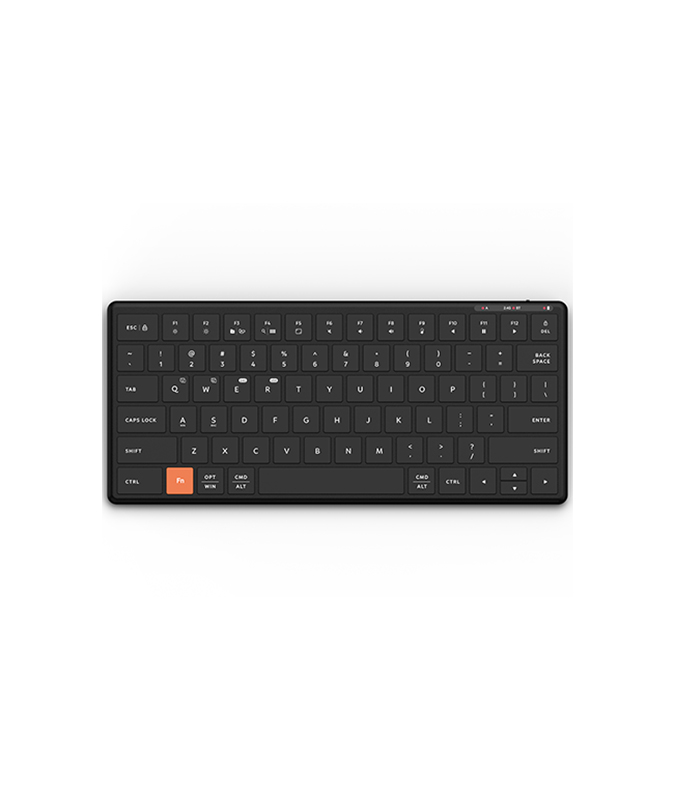
Weighing only 76g, this model offers seamless 2.4GHz and Bluetooth switching for multi-screen desktop multitasking.
A low-profile transparent chassis designed for frequent travelers, pairing easily with modern ultrabooks and tablets.
Curved split-keycap layout with dual spacebars and a matching vertical-angle mouse designed to reduce wrist strain.
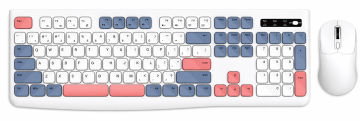
104-key spill-resistant layout and a 3-level DPI mouse. Standardized for institutional tenders and enterprise rollouts.
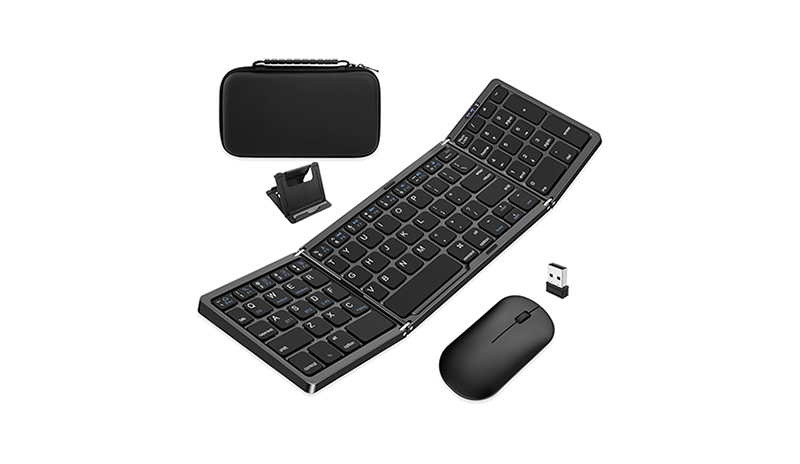
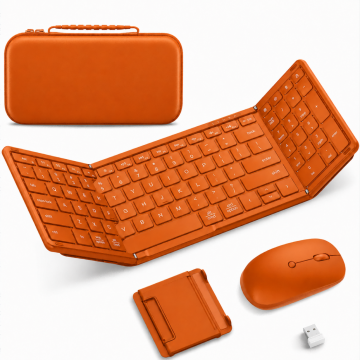
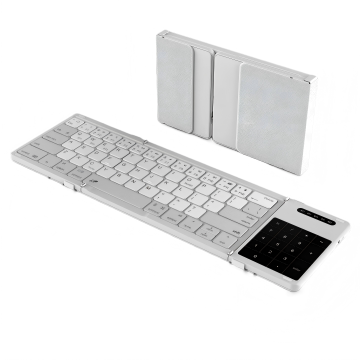
Tri-fold hinge mechanism with integrated numeric pad, paired with a flat-folding travel mouse for work on the go.
Aircraft-grade aluminum rear housing with integrated high-precision gesture trackpad, removing the need for a separate pointing device.
Anodized top deck with low-profile scissor switches, offering responsive, quiet tactile feedback for executives and creators.